
Veronica Moya Helps Kids Handle Disappointment in a Clever and Effective Way
What to do When You Face a Setback?
Every parent knows the exact moment their child is about to have a MAJOR tantrum. For a young child, not getting what they wanted does not feel like a minor inconvenience, it feel like a complete catastrophe.
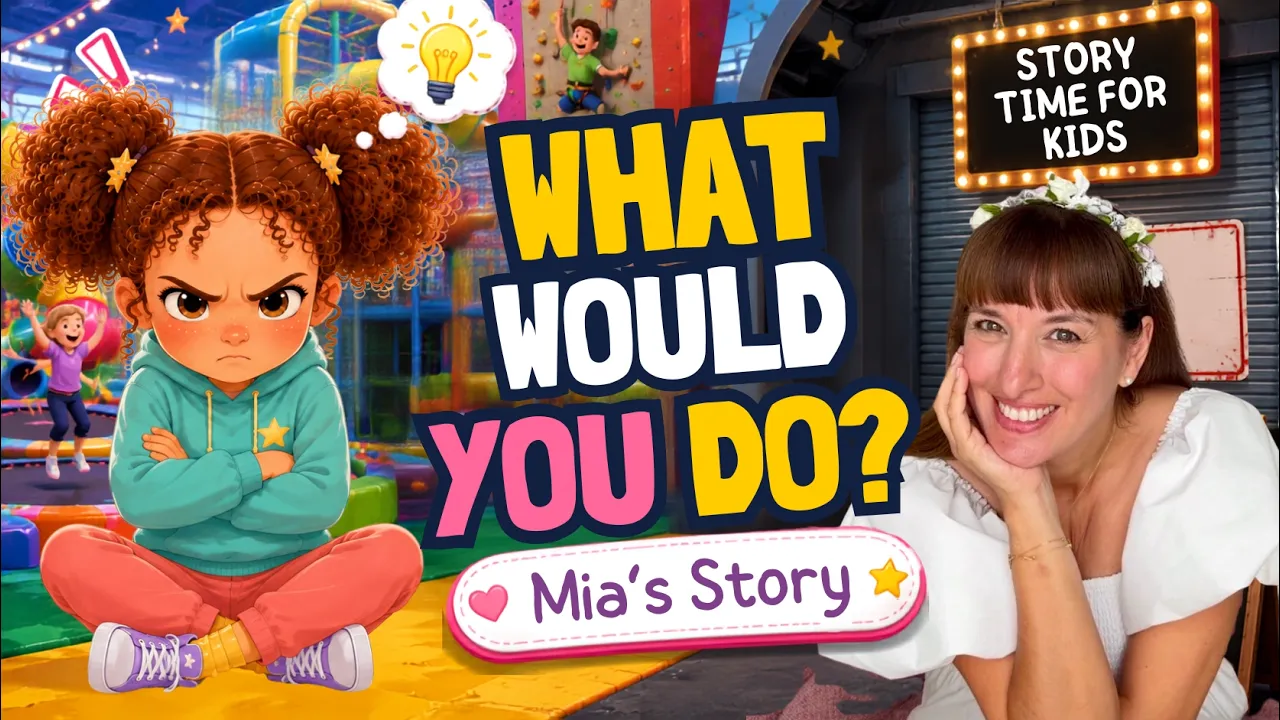
Learning how to navigate disappointment and adapt to change is one of the most vital socio-emotional skills a child can build. Veronica Moya created an interactive story about a young girl named Mia whose Saturday plans take a sudden turn. You can watch the whole video in our Youtube Channel “MindfulV“.
Below is Mia’s full story, alongside practical mindfulness strategies, step-by-step techniques, and talking points you can use at home or in the classroom to help children embrace a change of plans with expectation and glee:
The Story of Mia and the Unreachable Adventure Park
For an entire week, Mia had her eye on Saturday. Her mother had promised a trip to the grandest indoor adventure park in town, a vibrant venue packed with massive slides, wall-to-wall trampolines, high-climbing walls, and, most importantly, what Mia considered the single greatest chocolate milkshake in history.
Mia counted down every single day with eager excitement:
- Monday: “Only five days left!”
- Tuesday: “Four more days to go!”
- Wednesday through Friday: Pure anticipation and endless daydreaming.
When Saturday morning finally arrived, Mia leaped out of bed, laced up her sneakers in record time, grabbed her water bottle, and raced into the kitchen. She took a deep breath and shouted, “I am ready!”
But her mother was standing near the counter, staring down at her phone with “that face”, the unmistakable expression adults make when plans have gone completely off track.
Mia paused and asked, “What happened?”
Her mother looked at her gently and explained that a main pipe had burst overnight, flooding the building and forcing the adventure park to close its doors for the day.
In an instant, the excitement Mia had carried all week was gone. It was replaced by shock, frustration, and deep disappointment.
| [ Disappointment Strikes ] │ ▼ [ Pause & Take a Deep Breath ] │ ▼ [ Shift Focus: Control What’s Inside ] │ ▼ [ Discover New, Wonderful Opportunities ] |
Why Disappointment Feels So Overwhelming for Children?
To help children navigate emotional setbacks, it helps to understand what happens inside their minds when expectations crash into reality.
When children anticipate an event, their brains build an internal picture of how the future will look. They invest emotional energy into that vision. When an unexpected change wipes out that vision, children do not just lose an activity; they lose their sense of predictability and control.
Because the prefrontal cortex, the area of the brain responsible for impulse control, logic, and self-regulatio, is still developing in young children, emotional reactions happen rapidly. Frustration quickly turns into physical distress, leading to:
- Stomping, yelling, or physical tension
- Crying, clinging, or shut-down behaviors
- Repeating phrases like “It’s not fair!” or “This is the worst day ever!”
Mindfulness does not teach children to erase these reactions or pretend they do not exist. Instead, it provides them with a gentle bridge between feeling overwhelmed and returning to a grounded state.
Step 1: Validate Big Feelings Before Trying to Fix Them
When plans break, Mia did what almost every child does: she crossed her arms, stomped her foot on the floor, and declared, “This is not fair!”
It is natural for parents and educators to want to fix the mood right away by saying things like “It’s okay, don’t cry” or “We can just do something else!” However, skipping past a child’s feelings can make them feel unheard or misunderstood. Disappointment is a healthy, natural human emotion that deserves space.
How to Validate Feelings at Home or in School
- Acknowledge the emotional reality: Use clear, simple language to reflect what they feel: “You worked hard waiting all week for this, and it feels really disappointing that we can’t go.”
- Avoid immediate distraction: Give them a quiet moment to process the initial shock before offering alternative options.
- Normalize the experience: Remind them that everyone, including adults, feels angry or sad when things do not go as planned.
Step 2: The Inner World vs. Outer World Principle
Once the initial wave of emotion passes, children need a clear, physical way to understand what they can and cannot influence. In the Mindful Be story, we use a simple body-based visualization to teach this concept.
The Two-Hand Mindfulness Exercise
- Place your left hand over your chest (Your Inner World): This hand represents your feelings, your thoughts, your breath, and your choices. This space belongs entirely to you.
- Point your right hand outward toward the room (The Outer World): This hand represents everything outside of you, the weather, closed stores, broken pipes, traffic, or other people’s decisions.
Explain to children that while we cannot direct or force the outer world to match our wishes, we retain complete ownership over our inner world. We can always choose how we breathe, speak, and act in response to outside circumstances.
“We cannot always control what happens outside, but we can always choose how we respond inside.”
Step 3: Use Breath to Shift from Panic to Calm
When frustration takes over, the body enters a protective fight-or-flight state. Muscle tension rises, breathing becomes shallow, and clear thinking becomes difficult. To help children shift out of this physiological stress response, Mia used a simple two-step breath reset.
The Deep Release Reset Technique
- Close your eyes: Shield your eyes from surrounding distractions to turn attention inward.
- Inhale through the nose: Take a slow, deep breath, expanding the belly like a balloon.
- Exhale slowly through the mouth: Let out a long, audible sigh, releasing tension from the shoulders, jaw, and hands.
- Repeat twice: Two focused, deep cycles are often all it takes to signal to the nervous system that it is safe to relax.
This breathing reset opens up mental space. Instead of fighting reality, the mind lowers its guards and starts looking for creative solutions.
Interactive Practice: Real-Life Scenarios for Kids
Handling disappointment takes regular practice. Use the comparative guide below to walk children through everyday challenges using the Pause, Breathe, Choose framework:
| Real-Life Situation | Initial Impulse | Mindful Reframing Action |
| Rain cancels outdoor play | Stomping feet, yelling at the weather, or feeling ruined. | Pause, take a deep release breath, accept the rain, and build an indoor fort or start a craft project. |
| Sibling takes the desired cup | Grabbing it back, shouting, or starting a physical struggle. | Recognize that color does not change the taste, take a breath, and select a different cup. |
| Losing a game or competition | Throwing game pieces, quitting, or blaming others. | Acknowledge the disappointment, praise the effort put into playing, and congratulate the winner. |
| A favorite food is out of stock | Refusing to eat anything else or throwing a tantrum. | Take a breath, acknowledge the craving, and choose a new treat to try together. |
How Mia’s Day Ended: The Power of Creative Reframing

Once Mia let go of how her Saturday should have looked, her brain began generating fresh possibilities. Instead of focusing on the closed doors of the adventure park, she started asking simple questions:
- Could she and her mother explore a outdoor park they had never visited before?
- Could they stay home and create their own adventure obstacle course in the living room?
- Could they whip up an even better chocolate milkshake right in their own kitchen?
Mia and her mom chose to turn their kitchen into a milkshake laboratory. They blended ingredients, added toppings, and created a delicious treat that, according to Mia, tasted even better than the one at the adventure park.
The day did not go according to plan, but by staying open to new possibilities, it turned into an unforgettable memory.
Printable Mindfulness Guide for Parents & Educators
Keep these core principles handy in your home or classroom to support children whenever unexpected changes occur:
==========================================================================
                     THE 4-STEP MINDFUL RESILIENCE ROUTINE
==========================================================================

1. NAME IT TO TAME IT
   Let the child express their feeling without judgment.
   Phrase: "It is okay to feel disappointed when plans change."

2. PAUSE AND GROUND
   Place a hand on the heart and take two slow, deep breaths.
   Phrase: "Inhale calm, exhale frustration."

3. SEPARATE INNER & OUTER
   Remind them of what they can control versus what they cannot.
   Phrase: "I cannot fix the weather, but I can choose my next activity."

4. OPEN TO THE SURPRISE
   Encourage curiosity about new options.
   Phrase: "What new adventure can we create right now?"
==========================================================================
Key Affirmations for Growing Minds
Encourage children to memorize and repeat these grounding statements whenever they face unexpected twists in their routine:
- “I am wise and in control of my choices.”
- “When one door closes, a new adventure is waiting to be found.”
- “My calm breath brings me back to my best self.”
Bring Mindful Storytelling into Your Daily Routine
Interactive stories offer a safe, relatable way for children to internalize emotional regulation tools before they face real-world challenges. By working through Mia’s story together, you give your child a shared reference point they can draw on whenever plans fall through.
Join the Mindful V Community
Help your children build resilience, mindfulness, and self-confidence every week!
Subscribe and like our Youtube channel to catch our latest interactive storytelling videos, guided meditations, and positive affirmations tailored for young minds.
All my Love
Veronica Moya
Children’s Wellness Expert