
Helping Kids Handle Rejection with Confidence
Mindfulness for Kids: Helping Children Handle Rejection with Confidence
Growing up comes with so many exciting experiences, but it also comes with moments that can be difficult for children to understand. A child may not make the team they wanted, miss out on an invitation from friends, feel disappointed after an audition, have an idea that isn’t chosen, or simply hear the word “no” when they were hoping for a “yes.” These experiences are a natural part of growing up, but they can feel very big to a young mind.
As parents, we naturally want to protect our children from disappointment. We want to make everything better and remind them that everything will be okay. While our reassurance is important, children can also benefit from learning how to sit with their feelings, calm their minds, and reconnect with their confidence. This is where a simple mindfulness practice can become a wonderful tool to have in their growing emotional toolkit.
A Few Quiet Minutes Can Make a Difference
Mindfulness does not have to be complicated, serious, or difficult for children. It can simply mean taking a few quiet moments to breathe, close their eyes, notice how they feel, and redirect their attention toward something positive and empowering.
Veronica Moya’s Mindful V practice offers children an approachable way to do exactly that. Through deep breathing, visualization, and positive affirmations, children are invited to slow down and connect with a sense of peace and possibility.
Rather than focusing only on what went wrong, the practice encourages children to imagine their inner light, connect with their hearts, and remind themselves that they are loved, capable, and here with a purpose.
A gentle mindfulness exercise that parents and children can practice together.
Teaching Children That One “No” Does Not Define Them
For a child, rejection can sometimes feel much bigger than the situation itself. Not being picked for a team can feel like they are not good at sports. Not being invited to a birthday party can feel like nobody likes them. Not getting the role they wanted can make them question whether they are talented enough.
These moments are opportunities to teach an important life lesson: one experience does not define who you are.
Mindfulness gives children a chance to pause before allowing a disappointing experience to become a negative story about themselves. Instead of immediately thinking, “I’m not good enough,” they can learn to breathe, recognize the feeling, and remember that there are many possibilities ahead.
That simple pause can become a powerful habit as they grow.
Helping Kids Build Confidence from the Inside
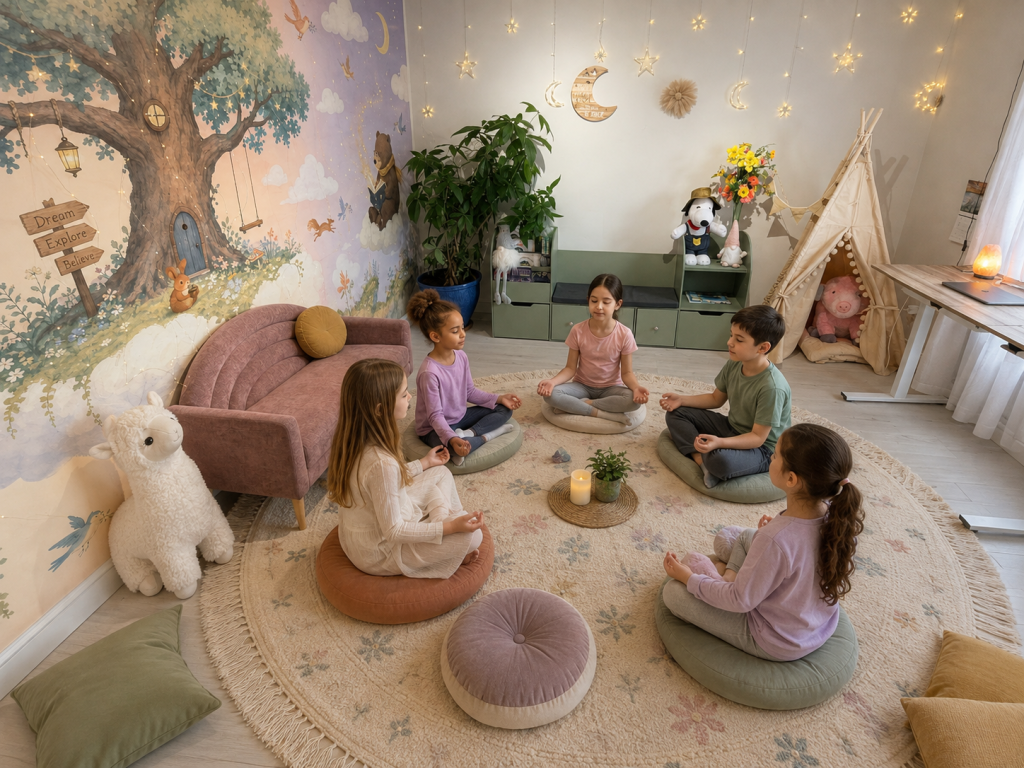
One of the most beautiful parts of this practice is that it doesn’t require a child to receive approval from someone else before feeling good about themselves.
Through affirmations such as “I am blessed,” “I am perfect and I have a purpose,” and “I am loved and I am here with a purpose,” children are encouraged to focus on their inherent worth rather than measuring themselves by whether someone else chooses them.
Of course, children will still experience disappointment. Mindfulness isn’t about teaching them that they should never feel sad, frustrated, or disappointed. Instead, it can give them a gentle way to acknowledge those feelings while remembering that those feelings don’t have to take over.
The goal is not to eliminate difficult emotions. The goal is to help children learn that they can experience an emotion, breathe through it, and continue forward.
A Wonderful Practice for Parents and Children to Share
One of the easiest ways to introduce mindfulness to a child is to do it together. Children don’t need a long lecture about meditation. They can simply see a parent sit beside them, take a deep breath, close their eyes, and participate.
You might make it part of a peaceful bedtime routine, a quiet moment after school, or a few minutes before an important event. Sit comfortably together and take a slow breath through the nose, followed by a gentle exhale through the mouth. Then invite your child to imagine a beautiful light in the center of their heart, becoming brighter and expanding throughout their body.
Keep the experience light and enjoyable. There is no need to insist that your child sit perfectly still or do everything exactly right. The beauty of mindfulness is in the practice, not perfection.
Give Your Child Words They Can Carry With Them
Children often need simple words they can remember when a difficult moment arrives. Positive affirmations can give them language for the confidence and self-trust you are helping them develop.
You can practice together by saying:
“I am blessed. I have a purpose. I am loved. I am guided. I trust myself. I can breathe and begin again. The right opportunities will find me. I am open to wonderful possibilities.”
Over time, these words can become familiar reminders that help children shift their attention from disappointment toward possibility.
The most important thing is that these affirmations are offered with warmth and encouragement. Children don’t need to feel pressured to “think positive.” They simply need a safe space where they can breathe, feel what they feel, and remember that they are supported.
Why Parents May Want to Make Mindfulness Part of the Routine
Childhood is full of moments that ask children to adapt, try again, make new friends, handle disappointment, and discover who they are. Giving them simple practices for slowing down and reconnecting with themselves can be a valuable part of supporting their emotional growth.
A short mindfulness practice can also become a special connection between parent and child. Instead of immediately reaching for a solution when something goes wrong, you can sit together, breathe together, and create a little space before talking about what happened.
Sometimes that quiet moment is exactly what a child needs.
Let Them Know They Are More Than One Outcome
As parents, we cannot make every rejection disappear from our children’s lives, and we don’t need to. Our children will encounter disappointment, change, uncertainty, and unexpected outcomes. What we can give them is something they can carry into those moments: the ability to pause, breathe, reconnect with themselves, and remember their worth.
The team they didn’t make does not determine their potential. The invitation they didn’t receive does not determine their value. The opportunity they missed does not determine what is possible for them in the future.
There are so many paths still waiting to unfold.
Mindfulness can be one small, joyful way to help children discover that they already carry something beautiful within themselves. With a few peaceful breaths, a little imagination, and encouraging words, they can begin learning that when one door doesn’t open, they don’t have to stop. They can breathe, trust, and keep moving forward.
Practice Together With Veronica Moya
If you’re looking for a simple way to introduce your child to mindfulness, take a few minutes to practice Veronica Moya’s Mindful V exercise together. Find a comfortable, quiet space, sit beside your child, and allow the experience to be relaxed and enjoyable.
There is no need to make it perfect. Just breathe, imagine, smile, and enjoy the moment together.
Because one of the greatest gifts we can give our children is not a life without disappointment, but the confidence to meet life’s moments with an open heart.
Let them breathe. Let them trust. Let them shine.