
Mindful Listening for Kids: A Simple Practice to Help Children Pay Attention
A gentle mindful listening for kids activity from Veronica Moya that helps children slow down, become still, and notice the sounds around them
Mindfulness can begin with something as simple as listening.
Children hear sounds throughout the day, but they don’t always stop to notice them. A car passing outside, a classmate moving in their chair, the sound of their own breathing, or the quiet after a bell fades away can all become opportunities to practise paying attention.
In Lesson 1 of Veronica Moya’s Mindfulness course for children, children are introduced to mindful listening through simple activities that encourage them to become still, quiet and aware of the sounds around them.
Watch the Mindful Listening Lesson
Before exploring the practice, watch Veronica’s lesson with your child or students. The video guides children through each activity so they can practise mindful listening along with her.
What Is Mindful Listening?
Mindful listening means giving our full attention to what we can hear in the present moment.
In the lesson, Veronica explains mindfulness to children as paying attention to what is happening right now.
This simple idea can make mindfulness easier for children to understand. Instead of asking them to simply “calm down” or “pay attention,” mindful listening gives them something specific to focus on: sound.
Children can listen to one sound, notice when it becomes quieter, or explore all the different sounds happening around them.
Start With a Mindful Body
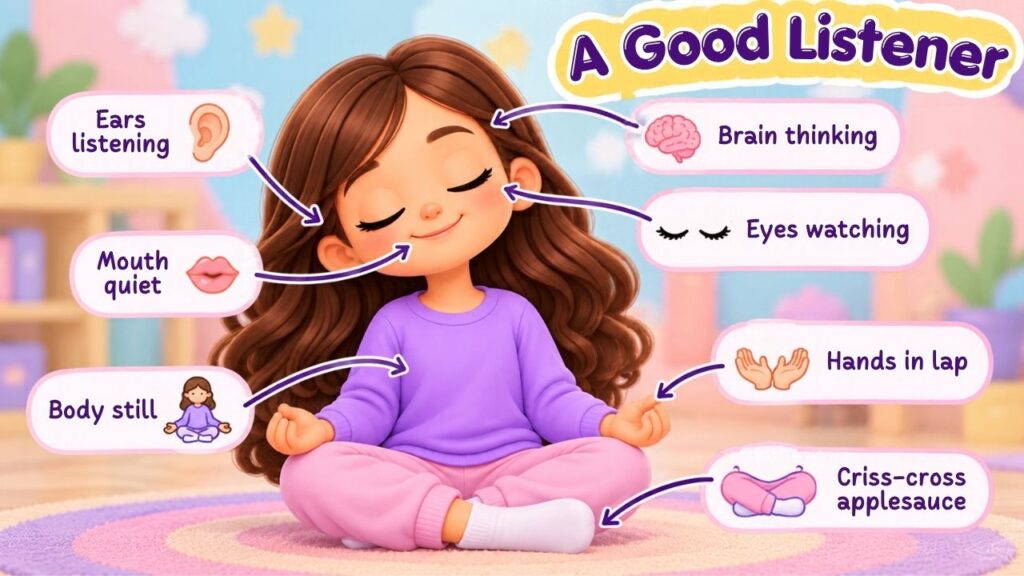
Before children begin listening, Veronica introduces the idea of having a mindful body.
She encourages children to sit up straight, become still and stay quiet. When the body becomes still, children may begin to notice something they normally overlook, the sounds around them. Veronica gives children the opportunity to practise sitting quietly for one minute before beginning the main listening exercise.
This first step is important because mindful listening is not only about the ears. It also involves creating enough stillness to give our attention to what we hear.
Listening to a Singing Bowl
Once children are ready, Veronica introduces a singing bowl. The sound begins clearly and then gradually fades.Rather than simply hearing the sound, children are encouraged to listen carefully and notice how long they can hear it.
This turns an ordinary sound into a mindfulness exercise. Children can begin to notice changes in the sound as it becomes softer and eventually disappears.
Try it yourself
You don’t need a singing bowl to practise mindful listening. You can use another gentle sound, such as a bell, chime or even the sound of a timer.
Ask your child:
“How long can you hear the sound?”
Then allow them to listen without interrupting.
Close Your Eyes and Listen
Next, Veronica invites children to close their eyes and listen again. Removing the visual activity around them can make it easier to focus attention on sound. Children listen carefully and raise their hands when they can no longer hear the bell.
This simple exercise encourages them to notice something they might normally miss the gradual change between hearing a sound and not hearing it anymore.
Listen to the Sounds Around You
The final listening exercise takes mindfulness beyond the singing bowl. Children close their eyes and listen to the sounds around them. Maybe they hear someone breathing. Maybe there are footsteps, people outside, a radiator, a chair moving or someone quietly fidgeting. There is no particular sound they need to find.
The goal is simply to notice. This can be a powerful way for children to discover that even an ordinary room contains many sounds when they stop and pay attention.
Mindful Listening Can Happen Anywhere
One of the most useful parts of this practice is that children don’t need special equipment or a dedicated mindfulness space.
They can practise mindful listening:
- At home
- In the classroom
- On the playground
- Outside
- During a quiet moment in the day
The practice can take just one minute.
Children can stop, become still and ask themselves:
What can I hear right now?
A One-Minute Mindful Listening Activity
You can try this simple exercise with your child or students.
1. Sit still.
Find a comfortable position and let your body become quiet.
2. Take a breath.
Take a slow breath in and gently breathe out.
3. Close your eyes.
If comfortable, close your eyes to reduce visual distractions.
4. Listen.
Notice every sound you can hear.
5. Don’t judge the sounds.
There is no good or bad sound. Simply notice.
6. Keep listening for one minute.
When the minute is over, ask:
“What did you hear?”
Children may be surprised by how many sounds they noticed.
Why Mindful Listening Is a Useful Practice for Children
Mindful listening gives children a simple way to practise attention and awareness.
It doesn’t require a long meditation session or complicated instructions. A child can practise for just one minute and gradually become more comfortable with stopping, becoming still and paying attention.
For parents and teachers, it can also be an easy activity to introduce during a transition, quiet time or classroom mindfulness practice. Most importantly, children are learning that they can pause and bring their attention to what is happening right now.
Start With One Quiet Minute
Mindfulness doesn’t always have to be a big activity. Sometimes, it can begin with simply stopping and listening. Veronica Moya’s mindful listening lesson gives children a practical way to explore this idea through sound, stillness and awareness.
Continue the Mindfulness Course
Explore more Mindfulness Lessons with Veronica Moya and discover simple practices that children can use at home, at school and in everyday life.