
Mindfulness for Children: The Inner Work (A Conversation with Jon Rasmussen)
Mindfulness for Kids: Inner Work
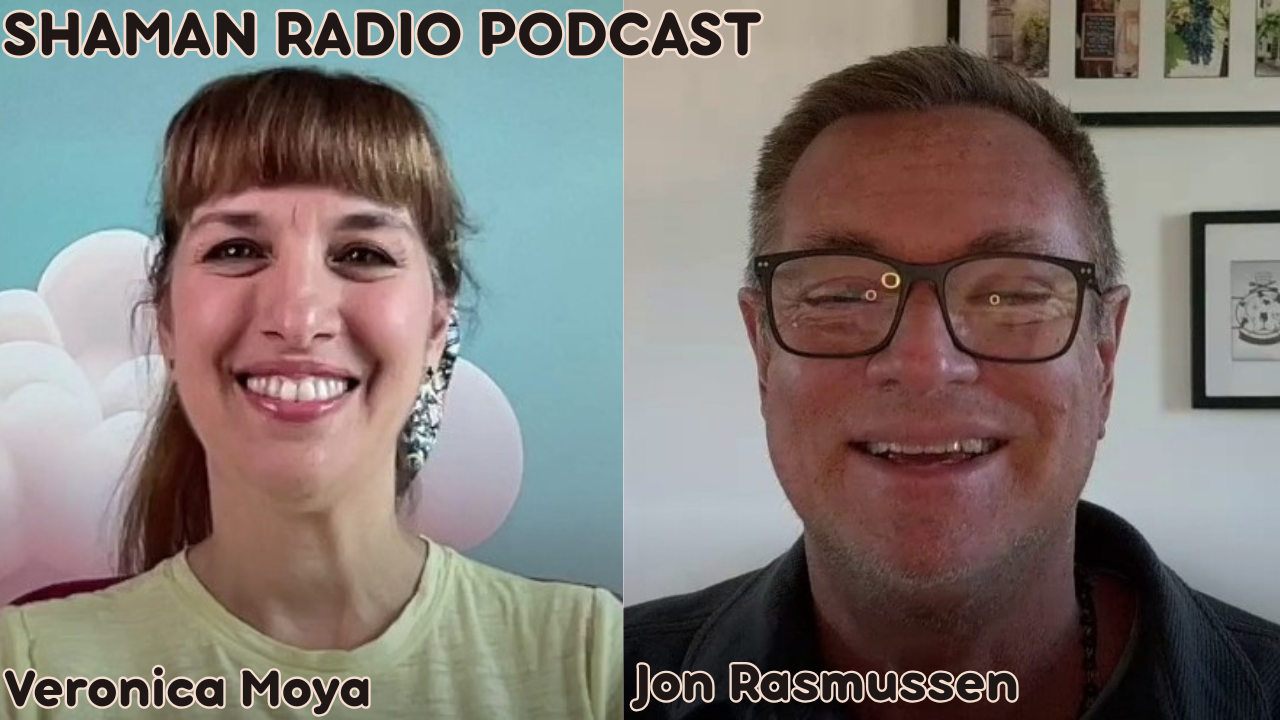
In a recent episode of the Shaman Radio Podcast, children’s emotional wellness expert Veronica Moya sat down with Jon Rasmussen, a shamanic practitioner, teacher, and founder of The Soul Algorithm.
Jon Rasmussen’s work centers on what he describes as shamanic energy medicine, helping individuals identify and shift deep subconscious and energetic patterns that influence behavior, emotions, and life experiences. Through his platform, The Soul Algorithm, he integrates psychology, spirituality, and practical tools for transformation.
While their backgrounds differ, the conversation revealed a strong alignment in their perspectives, particularly when it comes to supporting children.
The Missing Foundation: Inner Awareness
One of the central themes of the conversation was simple, yet often overlooked:
Children are taught how to think.
They are taught how to behave.
But they are rarely taught how to connect with themselves.
Jon Rasmussen compared this to an Iceberg, the visible portion representing thoughts and actions, while the much larger, unseen portion represents the subconscious and emotional world that drives behavior beneath the surface.
It is this deeper layer that is often neglected.
Why This Matters More Today
Today’s children are growing up in an environment of constant stimulation. Devices, noise, expectations, and external influence.
As both Veronica and Jon emphasized, the challenge extends beyond screen time. It includes the constant pull outward, the pressure to keep up, perform, and remain connected to external validation.
Children are highly intuitive. They absorb not only what is said, but what is felt by parents, teachers, and their environment.
Without tools to reconnect inward, this can lead to overwhelm and disconnection.
Emotional Wellness as “Mental Hygiene”
A key concept Veronica Moya emphasizes is Mental Hygiene.
Just as children care for their physical health daily, they also benefit from simple, consistent practices that support their mental and emotional well-being.
Not only when something is wrong.
But every day.
Even a few minutes of:
- stillness
- breathing
- quiet awareness
can help children reset, regulate, and reconnect with themselves.
As highlighted in the conversation, these practices are not abstract or exclusively spiritual, they are foundational tools that support focus, relationships, confidence, and overall well-being.
Children Already Have the Connection
A defining insight from Veronica’s work is this:
Children do not need to be taught how to connect inward, they already have that ability.
When given space, they respond naturally. They engage quickly and openly, often more easily than adults.
However, this connection tends to fade with age. Around 9 or 10 years old, skepticism increases and external influence becomes stronger.
This is why early exposure to mindfulness and inner awareness is essential.
The Role of Parents
Mindfulness cannot be forced.
Children cannot be pushed into stillness or self-awareness.
Instead, the most effective approach is modeling.
When parents create moments of calm and take time to pause, children observe and become curious. Over time, they begin to participate naturally.
The environment plays a greater role than instruction.
Emotional Wellness Is Not About Control
A common misconception is that emotional development is about controlling behavior.
This is not the goal.
Children need to fully experience their emotions, whether anger, sadness, or frustration.
Mindfulness provides awareness, not suppression.
It supports the ability to feel emotions without becoming overwhelmed by them.
A Shared Vision
Although Veronica Moya and Jon Rasmussen approach their work from different perspectives, their intention aligns.
Jon focuses on deep internal patterns and energetic transformation.
Veronica focuses on introducing simple, daily practices for children.
Both approaches aim to reconnect individuals with their inner world.
When children maintain that connection:
They develop self-trust.
They build resilience.
They carry a sense of calm and clarity into their lives.
Final Thought
Everything a child needs confidence, clarity, and emotional strength, is already within them.
The role of adults is not to add more, but to create space for that connection to remain.
When children learn to return to themselves early in life, they are less likely to lose who they are.
A Gentle Invitation
Veronica Moya’s work is dedicated to making emotional wellness simple, accessible, and part of everyday life for children.
Through guided mindfulness videos, classroom resources, and her nonprofit Mindful V, she provides practical tools that support children in building inner calm, confidence, and self-awareness from an early age.
To explore free resources and begin introducing these practices at home or in the classroom, visit:
👉 www.veronicamoya.com
👉 YouTube: https://www.youtube.com/@VeronicaMoya
For those who want to support bringing mindfulness into more classrooms and communities, learn more about Mindful V and how to get involved.
A few minutes a day can make a lasting difference.