
Holiday Stress in Kids: Tips for Calmer, Happier Holidays
Holiday Stress in Kids: Making Room for Calm and Connection
Holiday stress in kids can arise even when children are looking forward to school celebrations, family visits, and a break from their usual routines. A busy day of activities can leave a child feeling tired, overwhelmed, or ready to go home before everyone else.
Making room for those feelings is part of helping children enjoy the season. For parents, teachers, and caregivers, that can mean listening more closely, easing the pressure to participate, and leaving space for simple moments together.
In her holiday advice video, Veronica Moya shares ideas for supporting children and teens before, during, and after emotionally charged moments. Here are practical ways to bring those ideas into your holiday plans.
1. Make room for singing
Holiday music is often something children listen to while adults prepare meals, decorate, or drive to a gathering. Veronica encourages children to join in and sing something they enjoy.
It does not have to be a holiday song. Let a child choose a favorite tune, or invite a teenager to share a song they love. Keep it playful and free from pressure to sound good or perform for others.
Try a family sing-along while getting ready, or offer a familiar song during a classroom transition. The invitation matters more than the performance.
2. Begin the morning with mindful breathing
Before the day’s activities begin, make space for a brief pause. Veronica suggests morning breathing and setting an intention for the day.
For younger children, she demonstrates rainbow breathing: gently raise the arms while breathing in, then lower them while breathing out. Keep the movement and breath comfortable, without forcing either.
An intention can be simple: “Today, I will ask for help when I need it.” Teachers and caregivers can offer the same kind of pause at the beginning of a busy day.
3. Have honest, age-appropriate conversations
Family changes or tension can be difficult to explain, especially when adults want the holidays to feel happy. Veronica encourages adults to acknowledge what is happening rather than invent explanations to hide it.
Keep conversations appropriate to the child’s age and avoid placing adult responsibilities on them. A brief explanation can leave space for questions without sharing every detail.
For example: “Our plans are different this year. You can ask me questions, and we can talk about how you feel.” This is a suggested way to apply the idea, rather than a quotation from the video.
4. Listen to children’s preferences
An invitation to a playdate, performance, or optional activity does not feel the same to every child. Before adding another commitment, ask how they feel about taking part.
Veronica distinguishes optional activities from necessary family responsibilities. Where there is a choice, give children a chance to express it.
If a child hesitates, listen before deciding what comes next. They may want to watch first, take a smaller role, or choose a different activity.
5. Ease the guilt around doing less
Adults and children can feel pressure to attend every event or meet everyone’s expectations. Veronica’s advice is to make room for letting go of guilt.
Look at the holiday calendar together. Consider which plans matter most and where there is room to rest. Choosing fewer optional activities can be a thoughtful decision about what works for your family.
Model a clear, kind response: “Thank you for inviting us. We are keeping that afternoon free.” Children can see that setting a limit does not require an elaborate excuse.
6. Create a pause before gatherings
Before leaving home or welcoming guests, Veronica recommends a short breathing ritual together.
Take three slow, comfortable breaths, then try the affirmation she shares: “I am centered. I am in control.” She also invites children to imagine a protective bubble of light around themselves as a visualization.
Treat this as a gentle invitation. Children do not have to feel calm immediately or repeat words they do not want to say. The pause gives everyone a moment to check in before the next activity.
7. Make gratitude personal
A gratitude journal does not need to become another holiday assignment. Veronica suggests writing down something to be thankful for and something children feel proud of about themselves.
Keep it brief. Younger children can draw a picture or share their thoughts aloud; older children may prefer to write privately.
Leave room for mixed feelings, too. A child can appreciate a moment from the day and still feel disappointed about something else.
8. Leave time for movement and play
Holiday plans often involve meals, travel, and long periods of sitting. Veronica encourages families to include dancing and games that get children moving.
Choose something that fits your setting: a short dance break, a movement game, or time to play between activities. Offer accessible ways for children to participate at their own pace.
Movement can be part of the celebration itself, rather than another task squeezed into the day.
Make space for the holiday season children are actually experiencing
Start with one idea that fits the children in your care. Invite a song, pause before a gathering, or leave an afternoon open. Notice their response and adjust your plans together.
There is room for excitement, quiet moments, and changing feelings within the same holiday season.
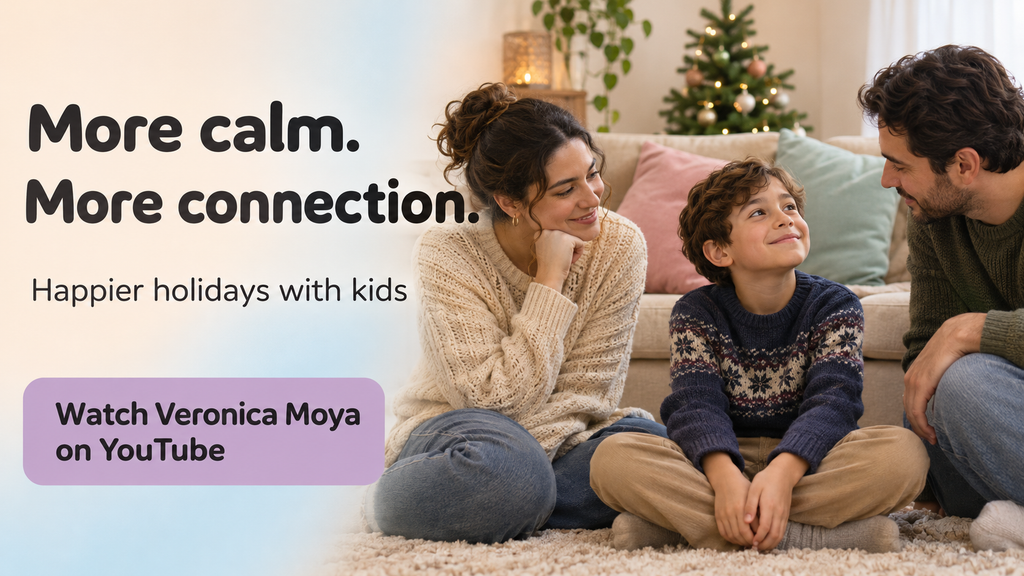
Watch Veronica Moya’s tips for calmer, happier holidays with kids on YouTube.
Explore more mindfulness resources from Veronica Moya.