
Mindful Thinking for Kids: Manage Wandering Thoughts
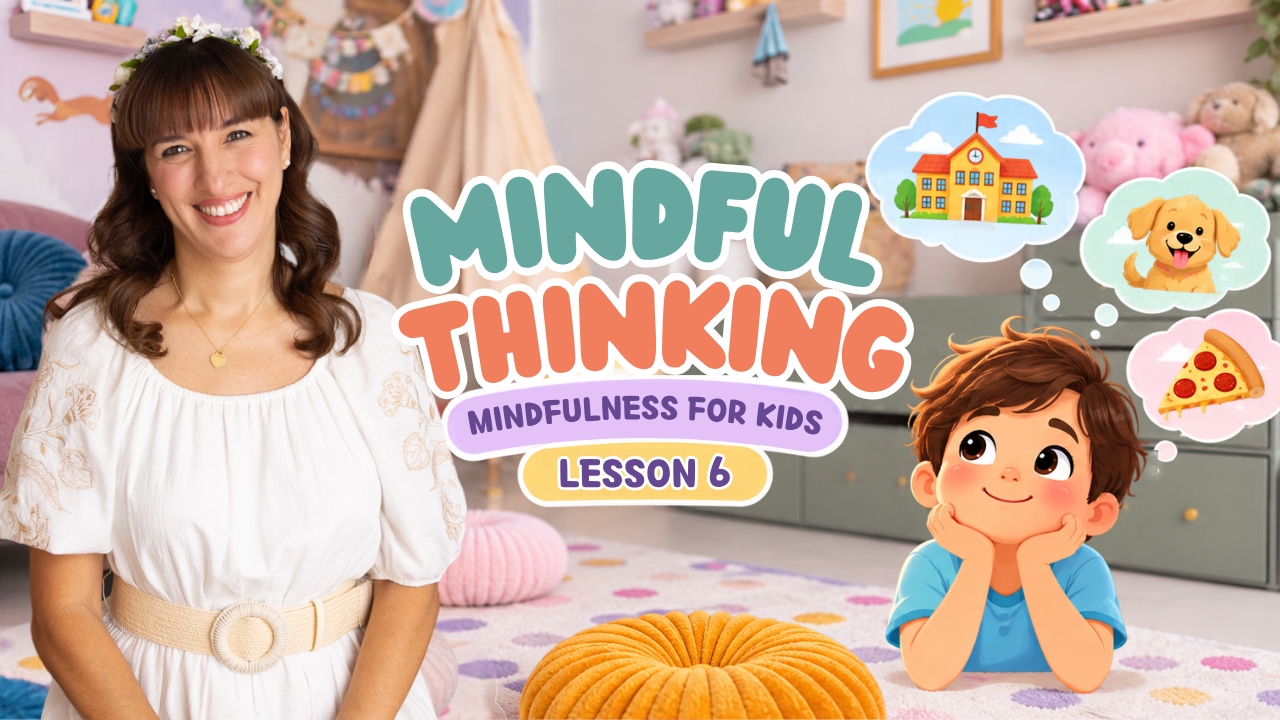
Mindful Thinking for Kids. Many parents and teachers notice that children struggle to stay focused for more than a few minutes. Whether they’re doing homework, listening in class, or trying a simple breathing exercise, their minds quickly jump to other things. This is completely normal, but it can make learning and calm activities feel frustrating for both kids and adults.
In Lesson 6 of her mindfulness series for children, Veronica Moya addresses this challenge in a clear and gentle way. The lesson, titled Mindful Thinking, helps kids understand why their minds wander and gives them a simple tool to bring their attention back to the present moment.
Why Children’s Minds Wander So Easily
During mindfulness or meditation, the usual goal is to focus on the breath. Children are often asked to breathe in and breathe out while paying attention to the feeling of the air moving in and out of their bodies. However, after just a short time, many kids find themselves thinking about something else entirely.
They might start thinking about what happened at recess, what they’re going to eat for lunch, what they’re going to do in gym class, or something someone said to them earlier. These thoughts can appear suddenly and pull their attention away from the present moment.
Veronica explains that the mind has a natural habit of traveling to the past or the future. It is very common for thoughts to appear during mindfulness practice. The important skill is not to stop thoughts from happening, but to notice when the mind has wandered and gently return to the breath. This is the foundation of mindful thinking.
Introducing the “Thinking, Thinking” Technique
One of the most practical tools taught in this lesson is a short phrase children can use when they realize their attention has drifted. Instead of feeling frustrated or telling themselves they are doing it wrong, they simply say:
“Thinking, thinking.”
This small label helps kids recognize the thought without judging it. After saying the phrase, they gently bring their attention back to their breathing. Over time, this practice reduces self-criticism and builds greater awareness of their own minds. It also makes mindfulness feel more approachable, because children learn that wandering thoughts are normal and expected.
A Simple 1 Minute Mindful Breathing Exercise
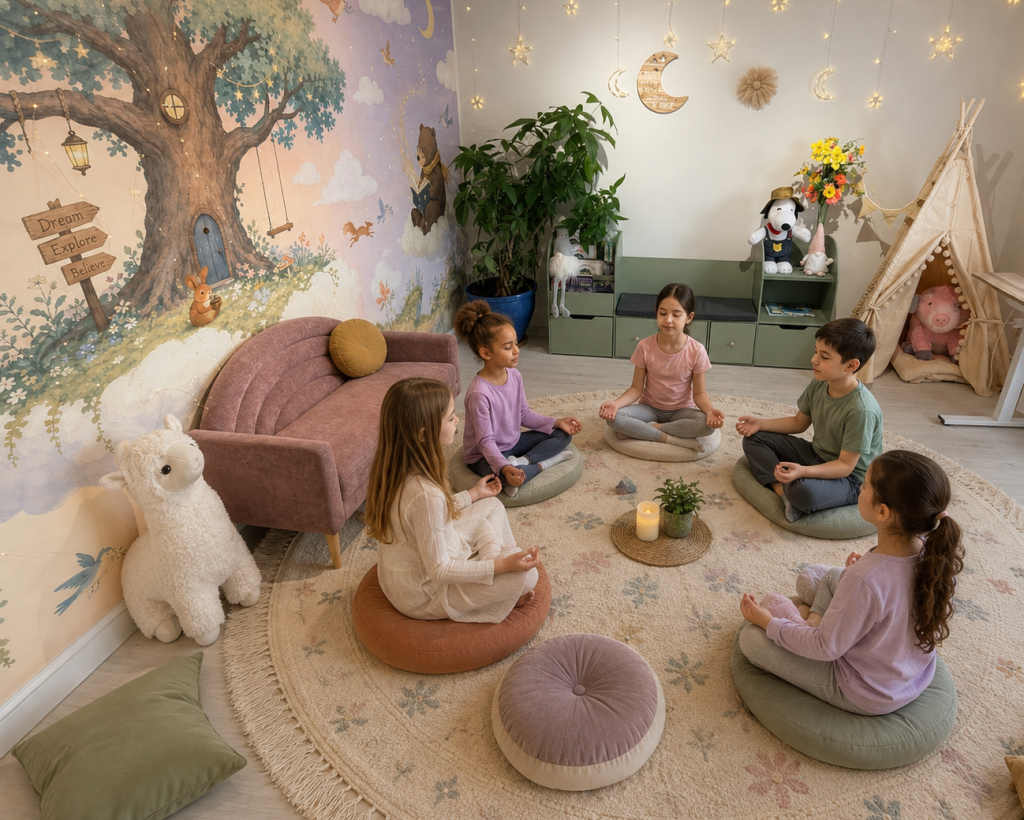
The lesson includes a guided one-minute practice that children can do together. Here is how it works:
- Get into a comfortable, mindful body position.
- Take a deep breath in and slowly let it out.
- Begin focusing on your natural breathing, breathe in, breathe out.
- When a thought appears, quietly notice it.
- Say to yourself, “thinking, thinking.”
- Gently return your attention to your breath.
- Continue for one full minute.
Thoughts will still come up during the minute. The goal is not to have a completely silent mind. The goal is to practice noticing the thoughts and coming back to the breath each time. Many children find that even one minute feels challenging at first, which is why Veronica keeps the practice short and encouraging.
Reflecting on the Experience
After the one-minute exercise, Veronica invites children to share how it went. She asks questions such as:
- How hard or easy was it to stay focused?
- Did you notice any thoughts?
- Did you say “thinking, thinking”?
- Were you able to come back to your breathing?
This reflection time is valuable because it helps children put their experience into words. Talking about what happened in their minds strengthens self-awareness and supports the development of emotional intelligence. When kids can describe their thoughts and feelings, they become better at understanding themselves.
Journal Questions to Deepen the Practice
The lesson ends with three simple journal prompts that children can answer in a notebook or on a piece of paper:
- How many thoughts do you think a person has each day?
- Is it easy or hard for you to stay focused on your breathing during mindfulness?
- How do you feel when you are focused on your breathing? How do you feel when you are lost in thinking?
Writing about these questions gives children another way to process their experience. It also reinforces the idea that mindfulness is not just something they do during a lesson, it is a skill they can observe and talk about in their daily lives.
How This Lesson Supports Emotional Intelligence
Veronica highlights that being able to notice and name thoughts and feelings is an important part of emotional intelligence. Children who develop this skill tend to handle challenges more calmly and feel more in control of their reactions. By practicing mindful thinking, kids learn that they can observe their minds instead of being completely carried away by every thought that appears.
She also reminds children that they are “the boss” of themselves. Their body and mind are their sanctuary, and learning to pay attention is a way of taking good care of both. With regular practice, the ability to notice wandering thoughts and return to the present becomes easier.
Practical Ways Parents and Teachers Can Use This Lesson
This mindful thinking exercise works well in many everyday settings:
- At home before bedtime or during a quiet morning moment
- In the classroom as a short reset between lessons
- During after-school programs or group activities
- Whenever children seem distracted or overwhelmed
Because the practice is only one minute long, it is easy to fit into a busy schedule. Parents and teachers can guide the exercise themselves or simply play the video and discuss the experience afterward.
Final Thoughts
Mindful thinking does not require long periods of silence or perfect concentration. It is a simple, repeatable skill that helps children notice when their minds have wandered and gently bring their attention back. Veronica Moya’s Lesson 6 offers a clear and age-appropriate way to introduce this skill, along with a short breathing exercise and helpful reflection questions.
Whether you are a parent looking for tools to support your child’s focus or a teacher wanting to add mindfulness to your classroom, this lesson provides a practical starting point. With consistent practice, children can become more aware of their thoughts, improve their ability to stay present, and build greater emotional intelligence over time.
Watch more lessons on Youtube: